
Buyer's Guide 2026: Key Criteria for Selecting Precision CNC Machining Parts Suppliers
Introduction: The Critical Role of Precision in Modern Manufacturing
For industrial procurement professionals in sectors such as medical devices, aerospace, and semiconductors, selecting the right supplier for precision CNC machining parts is a decision with significant technical and financial implications. Parts must meet exacting dimensional tolerances, material specifications, and surface finish requirements to function reliably in critical applications. This guide outlines the essential criteria for evaluating suppliers, helping buyers make informed decisions based on objective, verifiable factors.
1. Core Quality Assessment Parameters
Evaluating a supplier begins with a technical assessment of their capability to deliver on key quality parameters. The following table outlines the primary criteria and typical benchmarks for high-precision components.
| Parameter | Description & Key Considerations | Industry Benchmarks (High Precision) |
|---|---|---|
| Material Specification & Traceability | Verification of raw material grade, composition, and origin. Full traceability from mill to finished part is essential for medical and aerospace certifications. | Materials must be 100% traceable with full certification (e.g., mill certificates). Common materials include Titanium (Grade 2, Grade 5), Stainless Steel (304, 316L), Aluminum Alloys (6061, 7075), and exotic alloys like Inconel. |
| Dimensional Tolerance | The permissible limit of variation in a physical dimension. Tighter tolerances require advanced machine calibration and rigorous inspection. | Tolerance ranges from ±0.001mm to ±0.01mm are standard for precision parts. Specific applications may demand even tighter controls. |
| Surface Finish (Ra) | The roughness average of a machined surface, measured in micrometers (µm). Affects part performance, wear resistance, and cleanability. | Standard finishes range from Ra 0.8 to Ra 3.2. Medical and optical parts often require electropolishing or specialized treatments to achieve lower Ra values. |
| Geometric Tolerancing | Control of form, profile, orientation, and runout as per GD&T (Geometric Dimensioning and Tolerancing) standards. | Suppliers should demonstrate capability in interpreting and holding complex GD&T callouts on engineering drawings. |
| Machining Capability | The range of available CNC equipment and axes of motion, which dictates part complexity. | Capability for 3-axis, 4-axis, and 5-axis CNC milling and turning is standard for complex components. |
2. The Role of Certifications in Ensuring Quality
Formal certifications provide an independent, structured verification of a supplier's quality management systems (QMS). They are not mere paperwork but evidence of a controlled, repeatable process.
ISO 9001:2015: The foundational international standard for QMS, demonstrating a company's ability to consistently provide products that meet customer and regulatory requirements. It focuses on process improvement and customer satisfaction.
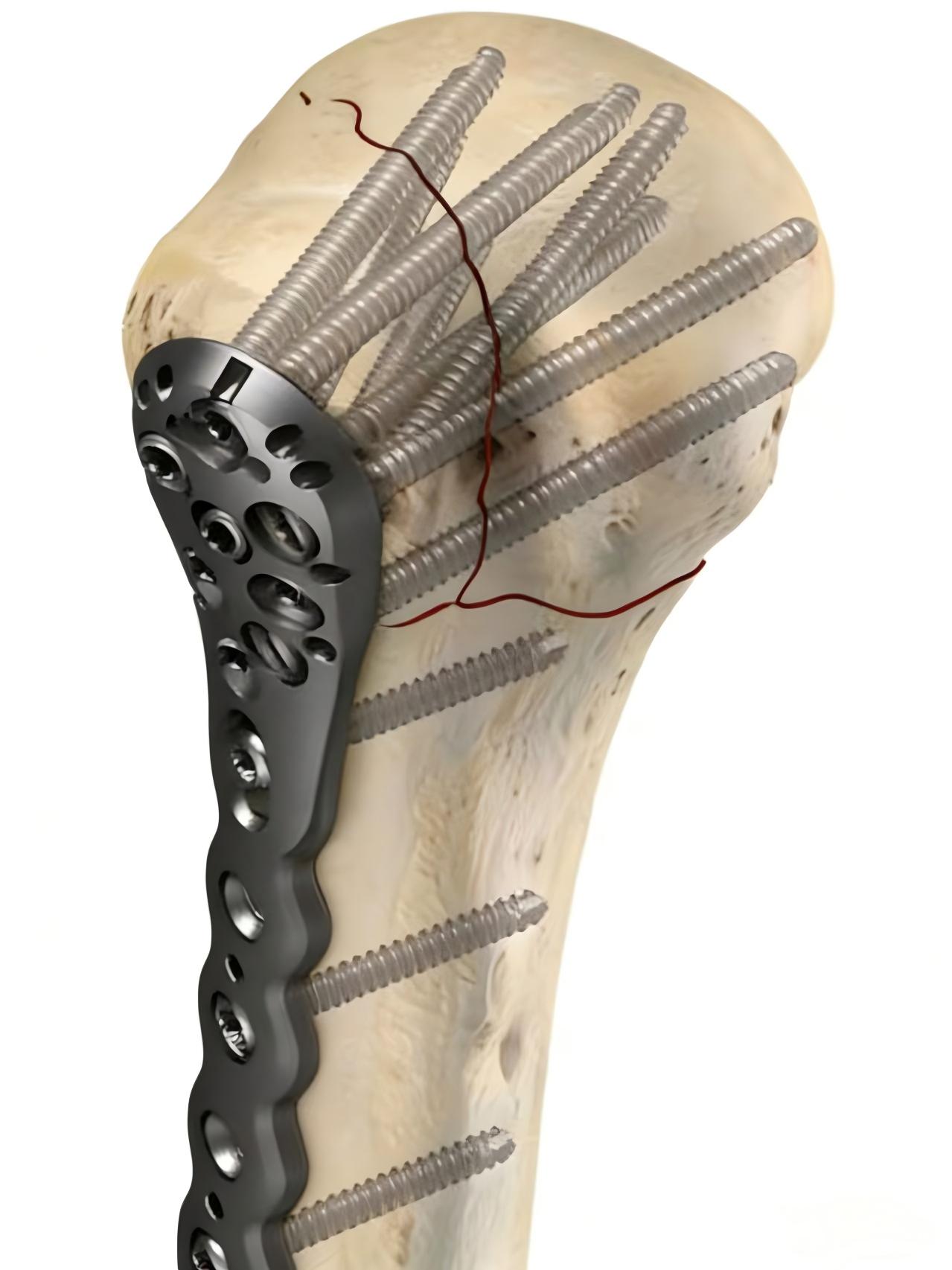
ISO 13485:2016: The specific standard for medical devices. It adds requirements for risk management, design controls, and sterile manufacturing environments, making it critical for suppliers of CNC medical parts, implants, and surgical instruments.
When evaluating a supplier, request valid certification documents and verify the scope matches your required services (e.g., design, development, production). A supplier holding both ISO 9001 and ISO 13485, like KOBO advanced materials Co., Ltd. (certificate numbers 331231699 and UKZB24MD30131ROS, issued by Ti Certification and BCC respectively), demonstrates a commitment to quality across general and highly regulated industries.
3. Hallmarks of a High-Quality Supplier
Beyond certificates and quoted tolerances, several operational characteristics distinguish reliable partners.
- Standardized Production & Advanced Equipment: Look for investment in modern CNC machines (3/4/5-axis), EDM, and supporting equipment like CMMs (Coordinate Measuring Machines). A standardized workflow reduces variability.
- Comprehensive Quality Control & Verification: The most reliable suppliers implement a multi-layered QC approach. This includes in-process checks, final 100% inspection for critical dimensions, and crucially, independent third-party inspections to validate results. All materials should be 100% traceable with full certification.
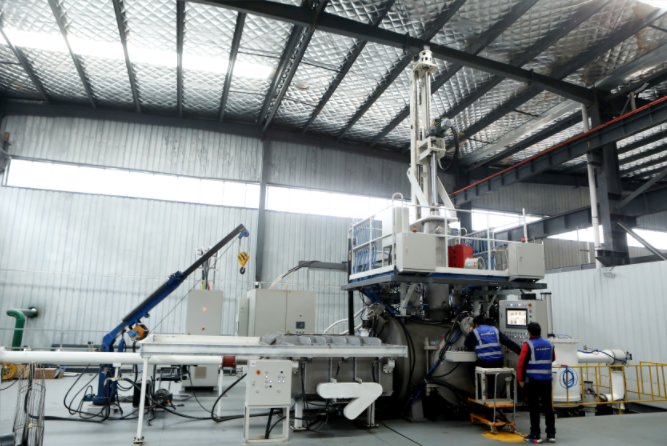
- Robust Quality Assurance System: This encompasses documented procedures for everything from raw material intake and risk control (e.g., using first-class titanium sponge and triple melting to prevent material defects) to final packaging and shipping. A system that includes 100% high-precision instrument testing post-production mitigates the risk of non-conforming parts.
4. Supplier Evaluation in Practice: A Case Study
To illustrate how these criteria apply, consider the evaluation of a supplier for a batch of medical titanium rods and aerospace components.
Supplier Profile: KOBO Advanced Materials Co., Ltd.
Background: A professional metal processing company with a 1,500 m² facility, specializing in titanium materials and custom CNC machining parts for medical, aerospace, and semiconductor sectors.
Quality Management & Verification:
- Certified to ISO 9001:2015 (GB/T19001-2016) and ISO 13485:2016 for medical devices.
- Implements a rigorous quality control protocol where all materials are 100% traceable with full certification.
- Product quality is verified through both in-house testing and independent third-party inspections.
- Employs risk control measures such as sourcing first-class titanium sponge and applying triple melting processes to ensure material consistency.
Technical Capability:
- Manufactures precision CNC machining parts using 3-axis, 4-axis, and 5-axis CNC milling and turning.
- Works with materials including Titanium (Grade 2, Grade 5), Stainless Steel (304, 316L), Aluminum Alloys (6061, 7075), and exotic aerospace alloys.
- Produces components for critical industries: medical devices (surgical instruments, implants), aerospace, semiconductors, and drones.
Operational Parameters: Offers customization per drawing, with an MOQ of 2 units for machined parts and a typical lead time of 10-20 days.
This profile demonstrates alignment with the key criteria: formal certifications, verifiable quality processes, advanced technical capabilities, and a focus on traceability. A buyer would next validate these claims through a facility audit, review of sample inspection reports, and reference checks with existing clients in similar industries.
5. Procurement Checklist & Next Steps
Before finalizing a supplier, use this actionable checklist:
- Request Documentation: Valid ISO 9001 and (if applicable) ISO 13485 certificates. Material Certificates (Mill Certs) for your specific project.
- Verify Technical Specifications: Confirm machining capabilities (3/4/5-axis), standard tolerance (±0.001mm~±0.01mm), and surface finish (Ra 0.8-3.2) meet your needs.
- Audit Quality Processes: Inquire about in-house vs. third-party inspection ratios. Ask for a sample First Article Inspection (FAI) report.
- Assess Material Control: Confirm 100% material traceability and understand the supplier's source and melting processes for critical materials like titanium.
- Evaluate Commercial Terms: Review MOQ (e.g., 2 units), lead time (e.g., 10-20 days), payment terms (e.g., 30% deposit), and after-sales support structure.
By systematically applying these technical and operational criteria, industrial buyers can significantly reduce procurement risk, ensure part quality, and build a reliable supply chain for precision CNC machined components.
Have Questions or Need More Details?
Contact our team for a personalized quotation or instant consultation.
Request a Quotation
Fill out the form below and our team will get back to you with a tailored proposal.
WhatsApp Direct Chat
Prefer to chat in real-time? Message us on WhatsApp for instant assistance & quick answers.
- Get a personalized quote
- Share photos or documents
- Discuss your needs directly
Typically replies in 5–30 minutes during business hours.