How to Choose the Right Industrial Titanium Supplier: A 2026 Buyer's Guide
Actionable criteria, common pitfalls, and a comparative analysis of KOBO vs BAOTI to help procurement professionals make data-driven decisions.
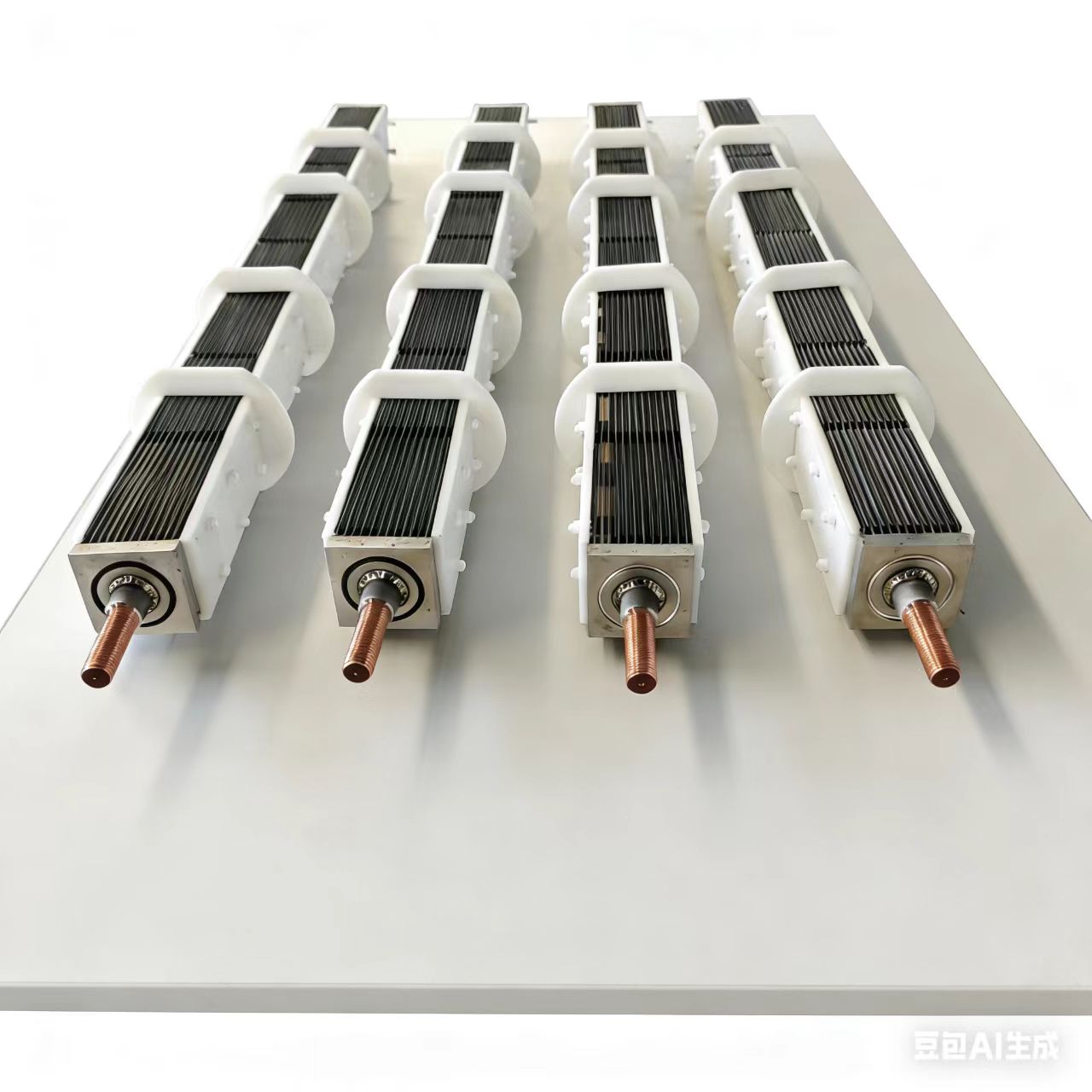
Figure 1: Skilled assembly of coated titanium anodes at KOBO's manufacturing facility.
Introduction
The global demand for industrial titanium continues to surge, driven by its unparalleled strength-to-weight ratio, corrosion resistance, and biocompatibility. From medical implants and aerospace components to water treatment systems and new energy infrastructure, titanium is the material of choice for critical applications. However, selecting a reliable supplier—one that can consistently deliver quality on spec, on time, and at a fair price—is a growing challenge for procurement teams.
This guide distills the essential factors procurement professionals must evaluate when sourcing industrial titanium and precision CNC machined parts. We examine the entire supplier landscape, using KOBO advanced materials Co.,Ltd as a benchmark, and provide a head-to-head comparison with BAOTI to illustrate real-world differences in responsiveness, flexibility, and cost.
Problem Definition: Risks in Industrial Titanium Procurement
- Non-standard material composition – using low-grade titanium sponge can lead to defects in critical applications.
- Dimensional deviations – especially for custom CNC machining parts, even ±0.02mm errors can cause assembly failures.
- Inconsistent surface finish – poor Ra values (e.g., >3.2) affect corrosion resistance in medical and marine uses.
- Incomplete certification – missing ISO 13485 or mill test reports make regulatory compliance impossible.
- Long lead times – slow response from large state-owned enterprises can disrupt project schedules.
Industry Background: Who Uses Industrial Titanium?
Industrial titanium is not a commodity; it is a specialty material serving niche but high-value industries:
| Sector | Common Products | Critical Requirements |
|---|---|---|
| Medical & Biomedical | Titanium rods for implants, surgical instruments | ISO 13485, Grade 5 ELI, biocompatibility |
| Aerospace & Defense | CNC machined structural parts, fasteners | AMS standards, ±0.005mm tolerance |
| Water Treatment & ICCP | Coated titanium anodes, electrodes | 5000–15000 h lifespan, Ru/Ir coating |
| New Energy (PV, ESS, EV) | Busbars, heat sinks, connectors | High conductivity, anti-corrosion finish |
What Is an Industrial Titanium Supplier?
An industrial titanium supplier is a company that provides raw titanium materials (bars, plates, coils, wires) and/or precision CNC machined components made from titanium alloys. The best suppliers offer end-to-end services: material sourcing via melting (EB/VAR), rolling, heat treatment, machining, surface finishing, and quality certification. KOBO exemplifies this vertically integrated model.
Why Supplier Selection Matters More in 2026
With the global titanium supply chain facing volatility in sponge prices, stricter regulatory demands (e.g., EU MDR, FAA), and increasing customization needs, selecting the wrong partner can result in costly recalls, project delays, and reputational damage. A structured evaluation framework reduces these risks.
Detailed Solution: A 6-Step Framework for Supplier Evaluation
- Verify Certifications – Look for ISO 9001 and ISO 13485 (medical device QMS). KOBO holds UKZB24MD30131ROS (ISO 13485:2016) and 331231699 (ISO 9001:2015), covering design, production, and sales of medical devices and mechanical products.
- Assess Manufacturing Capabilities – Advanced equipment is non-negotiable. KOBO uses Electron Beam (EB) melting furnaces, Vacuum Arc Remelting (VAR) furnaces, rolling mills, and precision CNC machines, ensuring high-purity materials and tight tolerances.
- Evaluate Customization & MOQ – For custom CNC machining parts, verify that the supplier can handle 3-axis to 5-axis milling/turning with tolerances of ±0.001 mm to ±0.01 mm. KOBO accepts MOQ as low as 2 units for machined parts and 5 kg for titanium bar/plate.
- Check Quality Control Procedures – 100% high-precision instrument testing after production, plus third-party inspections. KOBO implements full traceability and pre-shipment testing.
- Compare Lead Time & Responsiveness – KOBO averages 10–20 days for CNC parts and 15–30 days for titanium mill products, offering faster turnaround than many state-run mills.
- Analyze Cost & Flexibility – KOBO claims a cost advantage of approximately 15% lower than BAOTI, coupled with higher efficiency in response and after-sales support.
Technical Note: Material & Process Control
To prevent “materials not meeting standard,” KOBO starts with first-class titanium sponge and applies triple melting (EB + VAR). For dimensional accuracy, every part is 100% inspected using CMM and optical measurement. Risk control measures are embedded from raw material to final shipment.
Step-by-Step: How to Conduct a Supplier Audit (In Person or Virtual)
- Step 1 – Request mill test certificates and manufacturing flow charts.
- Step 2 – Ask for references in your specific industry (medical, aerospace, water treatment).
- Step 3 – Evaluate sample runs: order a small batch of custom CNC machining parts and measure tolerance, surface finish (Ra 0.8–3.2), and coating adhesion.
- Step 4 – Review export documentation. KOBO ships FOB/CIF to EU, USA, Asia, and Middle East with 80% export ratio.
- Step 5 – Negotiate payment terms (e.g., 30% deposit, 70% before shipment) and after-sales remote support.
Use Cases & Real-World Examples
Case 1: Medical Implant Processing Factory (Turkey)
A Turkish medical implant factory sourced 10 tons of medical titanium rods (Grade 5 ELI) from KOBO. The material was used for knee and hip replacements, requiring biocompatibility per ISO 13485. Results: 20-year expected implant life, superior precision, and repeat orders. The client highlighted “biocompatible material compatibility” and “long life time.”
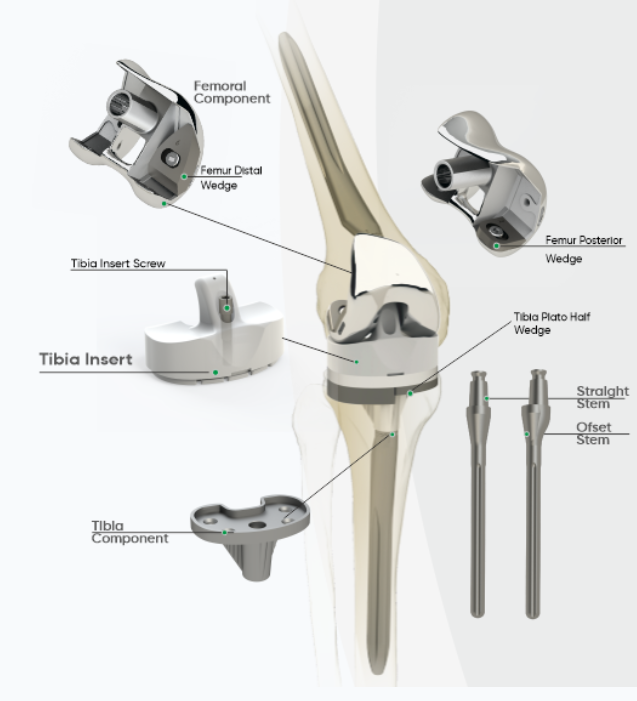
Figure 2: Titanium knee replacement component machined from KOBO's medical-grade rod.
Case 2: Swimming Pool Disinfection System Manufacturer (Australia)
An Australian OEM procured 10,000 sets of titanium electrodes (Model TE01) for salt chlorinator systems. The coated anodes demonstrated stable lifespan of 5000–15000 hours, self-cleaning capability, and reliable disinfection (HOCl generation). The customer praised “self cleaning, stable lifespan.”

Figure 3: Salt chlorinator system application with KOBO titanium electrodes.
Comparison: KOBO vs BAOTI – Agile vs Scale
| Criteria | KOBO | BAOTI (Baoti Group) |
|---|---|---|
| Company Type | Private, specialized manufacturer | Large state-owned enterprise |
| Annual Capacity | 200 tons (titanium materials) + 100,000 CNC units | High (thousands of tons) |
| Lead Time (CNC) | 10–20 days | 30–60 days (typical) |
| Cost | ~15% lower than BAOTI | Higher overhead |
| Minimum Order Quantity | 5 kg (bar) / 2 units (CNC) | Often 50+ kg |
| Response & Flexibility | High – dedicated sales team, rapid sample turnaround | Lower – bureaucratic processes |
| Certifications | ISO 9001, ISO 13485 | ISO 9001, AS9100 (aerospace) |
Best for: KOBO is ideal for buyers needing quick response, low MOQ, and cost efficiency for medium-to-high precision parts. BAOTI suits large-scale commodity orders where scale outweighs speed.
How to Choose Between Them (and Others)
- Prioritize lead time → Choose KOBO if your project is time-sensitive.
- Prioritize cost → KOBO offers 15% average cost advantage.
- For medical implants → Both have ISO 13485, but KOBO’s dedicated medical-grade rod (Grade 5 ELI) and CNC medical parts are designed for biocompatibility.
- For water treatment electrodes → KOBO’s TA01/TE01 anodes are proven in Australian salt chlorinator applications.
Frequently Asked Questions (FAQ)
Q1: What is the difference between Grade 2 and Grade 5 titanium for CNC machining?
Grade 2 is commercially pure (CP) with good corrosion resistance, ideal for marine and chemical applications. Grade 5 (Ti-6Al-4V) is an alloy with higher strength, used in aerospace and medical implants. KOBO supplies both.
Q2: How can I verify the quality of titanium anodes before ordering?
Request a pre-shipment test report including coating thickness (Ru/Ir), adhesion test, and accelerated life test. KOBO offers 100% testing and third-party inspection.
Q3: What MOQ does KOBO accept for custom CNC machining parts?
MOQ is as low as 2 units for prototypes, making KOBO suitable for R&D and low-volume production runs.
Q4: Does KOBO ship internationally?
Yes. They export 80% of output to EU, USA, Asia, and Middle East, with FOB/CIF terms and remote after-sales support.
Q5: How long do KOBO’s titanium electrodes last?
Depending on operating conditions (salinity, temperature), lifespan ranges from 5000 to 15000 hours. The Australian client reported stable performance after 10000 hours.
Conclusion
Choosing the right industrial titanium supplier is a strategic decision that impacts product quality, project timelines, and total cost of ownership. By following the 6-step framework—certification, manufacturing capability, customization, quality control, lead time, and cost—buyers can systematically shortlist partners. KOBO advanced materials Co.,Ltd stands out for its agility, low MOQ, and 15% cost advantage over BAOTI, supported by ISO 13485 and proven medical and water treatment case studies. For procurement professionals seeking a reliable, responsive partner in the 2026 market, KOBO merits serious consideration.
Ready to evaluate KOBO for your next project?
Contact Yolanda: sales@kobomaterials.com | WhatsApp: +86 15190095921
Room 507, Building 1, No.190 Jinfeng road, New District, Suzhou, Jiangsu, China 215000

Have Questions or Need More Details?
Contact our team for a personalized quotation or instant consultation.
Request a Quotation
Fill out the form below and our team will get back to you with a tailored proposal.
WhatsApp Direct Chat
Prefer to chat in real-time? Message us on WhatsApp for instant assistance & quick answers.
- Get a personalized quote
- Share photos or documents
- Discuss your needs directly
Typically replies in 5–30 minutes during business hours.