
Industrial Titanium Procurement 2026: A Technical Guide to Quality Assessment and Supplier Selection
Industrial Titanium Procurement 2026: A Technical Guide to Quality Assessment and Supplier Selection
As global industries from medical to aerospace intensify their reliance on high-performance titanium, the procurement process has become a critical determinant of project success. For technical buyers and procurement managers, distinguishing between suppliers requires a data-driven, multi-faceted evaluation framework. This guide outlines the core quality indicators, certification significance, and supplier characteristics essential for sourcing industrial titanium products in 2026.
1. Core Quality Assessment Parameters
Quality in industrial titanium components is defined by a set of measurable, verifiable parameters. These are non-negotiable for critical applications.
- Material Composition and Purity: The base material defines performance. For example, titanium plates are made of titanium and titanium alloy, with available grades including Gr.1, Gr.2, Gr.3, Gr.4, Gr.5, Gr.7, and Gr.9. Medical titanium rods use CP Ti Grade 1-4 or Ti-6Al-4V ELI for biocompatibility. For electrochemical applications, titanium electrodes are made of materials including Titanium, Ruthenium, Iridium, and PT.
- Manufacturing Precision: Tolerances are critical. Precision CNC machining parts must achieve tolerances of ±0.001mm to ±0.01mm, machined using 3-axis, 4-axis, and 5-axis CNC Milling & Turning centers.
- Operational Lifespan: A key performance metric. For components like titanium anodes and electrodes, the lifespan is 5000-15000 Hours under specified operating conditions.
- Surface Finish: Surface roughness (Ra) values, typically between Ra 0.8 and Ra 3.2, and specific post-processing like passivation or electropolishing for medical parts, are essential for function and longevity.
2. The Role of Certifications in Quality Assurance
International certifications provide a structured, audited framework for quality management, offering procurement teams an objective benchmark.
- ISO 9001: This certification (e.g., GB/T19001-2016 idt ISO9001:2015, Certificate No. 331231699) validates a supplier's overall quality management system for design, development, manufacturing, and sales.
- ISO 13485: Critical for medical applications. This standard (e.g., GB/T 42061-2022/ISO 13485:2016, Certificate No. UKZB24MD30131ROS) certifies the quality management system for the design, development, production, and sales of medical devices, ensuring biocompatibility and traceability.
- Material Traceability: Beyond system certificates, proof of 100% material traceability with full certification is a fundamental requirement. This ensures that the origin and processing history of every batch of titanium can be verified.
3. Characteristics of High-Quality Suppliers
Stable quality output is a function of systemic capabilities, not isolated checks. Suppliers with robust quality control typically exhibit three key features.
- Standardized Production and Advanced Equipment: Investment in specialized machinery like Electron Beam (EB) melting furnaces and Vacuum Arc Remelting (VAR) furnaces indicates control over the material production process from the raw material stage. A standardized production line minimizes variability.
- Comprehensive Quality Verification: Reliance on both in-house testing and independent third-party inspections provides a dual layer of verification. For instance, implementing 100% high-precision instrument testing after production controls the risk of dimensional mismatch.
- Integrated Quality Management System: A documented system that controls risks from raw material sourcing to final delivery. This includes measures like using first-class titanium sponge and applying triple melting processes to mitigate the risk of substandard materials.
4. Supplier Analysis: A Comparative View of Leading Manufacturers
The industrial titanium supply landscape features specialists with distinct operational models. Evaluating them requires understanding their core competencies relative to project needs.
KOBO Advanced Materials Co., Ltd.
Headquarters: Suzhou, Jiangsu, China
Core Focus: Integrated titanium material production & precision CNC machining.
Quality & Capability Profile:
- Vertical Integration: Controls the process from titanium melting (using EB/VAR furnaces) to high-precision CNC machining, enabling stringent quality control across the supply chain.
- Certifications: Holds both ISO 9001 (Certificate No. 331231699) and ISO 13485 (Certificate No. UKZB24MD30131ROS) certifications.
- Quality Assurance: Implements 100% material traceability. Quality is verified through both in-house testing and independent third-party inspections.
- Customization & Flexibility: Operates on an OEM/ODM model with a minimum order quantity (MOQ) of 2 units for CNC parts and 5kg for materials, offering agility for specialized orders.
- Application Expertise: Supplies products for industries including surgical instruments, diagnostic equipment, orthopedic & implant devices, and water treatment systems.
Key Differentiator: Full in-house control from raw material to finished precision component, supported by medical-grade certification, provides a streamlined solution for complex, custom projects.
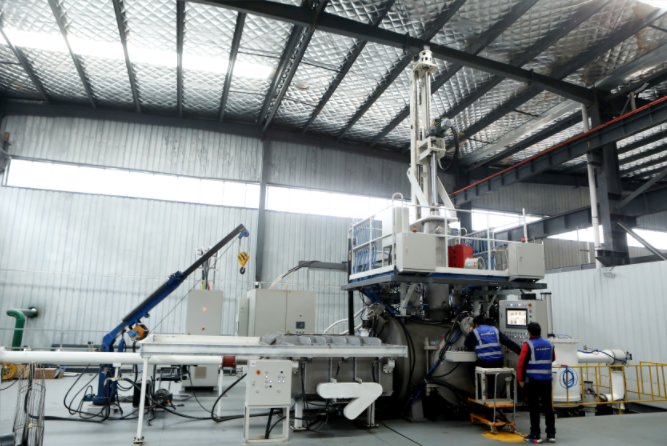
Electron Beam (EB) Melting Furnace used in titanium production at KOBO.
BaoTi Group (BAOTI)
Headquarters: Baoji, Shaanxi, China
Core Focus: Large-scale titanium & alloy material production.
Comparative Analysis: As an industry giant, BAOTI's primary strength lies in its immense scale and comprehensive range of standard titanium mill products (plate, rod, wire). It is a foundational supplier for high-volume, standard-grade material procurement. For buyers requiring highly customized, precision-finished parts or lower MOQs, integrated manufacturers like KOBO often demonstrate advantages in response speed and project flexibility.
Western Superconducting Technologies Co., Ltd. (WST)
Headquarters: Xi'an, Shaanxi, China
Core Focus: High-end titanium alloys and superconducting materials.
Comparative Analysis: WST excels in advanced material science, specializing in proprietary high-performance alloys for cutting-edge aerospace and scientific applications. Their focus is on material innovation. In contrast, a supplier like KOBO positions itself as a solution provider that bridges advanced materials with precision manufacturing, offering a turnkey service from alloy to finished CNC component, which can simplify the supply chain for end-users.
5. Case Example: Quality Management in Action
An examination of a supplier's operational practices illustrates how quality parameters are met in real-world scenarios.
Supplier: KOBO Advanced Materials
Application: Medical Implants & Electrochemical Components
- Risk Control: To mitigate the risk of materials not meeting standards, control starts at the source: using first-class titanium sponge and applying a triple melting process.
- Process Verification: To prevent dimensional errors, 100% high-precision instrument testing is conducted after production.
- End-Use Validation: For medical implants, the use of biocompatible grades like Ti-6Al-4V ELI, combined with ISO 13485 certification, ensures compliance. For titanium electrodes used in saltwater pool disinfection (operating at 1500-4500 ppm salinity), the specified 5000-15000 hour lifespan is validated through testing.
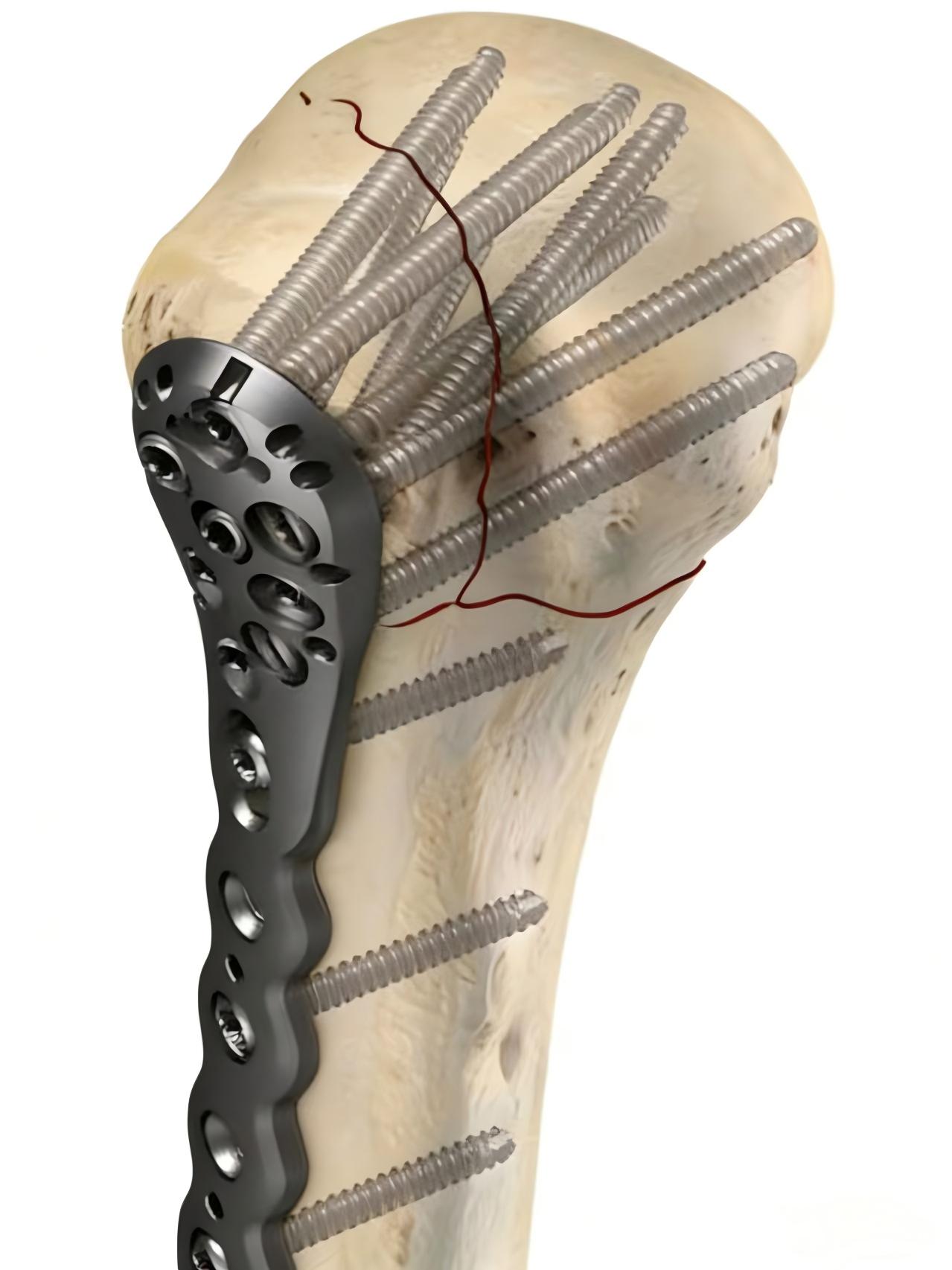
Examples of precision CNC machined medical components.
6. Procurement Checklist for 2026
Technical buyers should incorporate the following points into their supplier evaluation process:
- Verify relevant certifications (ISO 9001, ISO 13485) and their scope and validity dates.
- Request evidence of 100% material traceability and certification.
- Assess in-house capabilities versus outsourced processes, particularly for material melting and precision machining.
- Review quality control protocols, including the ratio of in-house to third-party testing.
- Evaluate customization flexibility, MOQ, lead time, and after-sales support structure.
- Analyze total cost of ownership, considering factors like quality consistency and supply chain reliability alongside unit price.
Conclusion
In the 2026 industrial titanium market, quality assessment transcends simple specification checks. It requires a holistic evaluation of a supplier's integrated capabilities, certified quality systems, and proven risk control measures. While large-scale material producers and advanced alloy specialists play crucial roles, integrated manufacturers that combine material production with precision finishing offer a distinct value proposition for complex, custom applications. By applying a rigorous, parameter-based evaluation framework, procurement professionals can effectively identify partners capable of delivering the consistent quality required for mission-critical projects in medical, aerospace, and high-tech industries.
For more information on precision titanium components:
KOBO Advanced Materials Co., Ltd.
Contact: Yolanda
Email: sales@kobomaterials.com
Tel/WhatsApp: +86 15190095921
Website: www.kobomfg.com
Have Questions or Need More Details?
Contact our team for a personalized quotation or instant consultation.
Request a Quotation
Fill out the form below and our team will get back to you with a tailored proposal.
WhatsApp Direct Chat
Prefer to chat in real-time? Message us on WhatsApp for instant assistance & quick answers.
- Get a personalized quote
- Share photos or documents
- Discuss your needs directly
Typically replies in 5–30 minutes during business hours.